
Learning about financial entries is key for keeping accurate records. Real-life examples show us how transactions can affect accounts. They highlight the importance of understanding journal entries in everyday business. In contrast, liability and equity accounts have a credit balance. Liabilities are what a company owes, like Accounts Payable and Notes Payable, and rise with credits.
Debit and Credit
• For every debit entry, there has to be a corresponding credit entry, and for every credit entry, there has Accounting For Architects to be a corresponding debit entry. Based on the rules of debit and credit (debit means left, credit means right), we can determine that Assets (on the left of the equation, the debit side) have a Normal Debit Balance. The key to understanding how accounting works is to understand the concept of Normal Balances. An increase in expenses and losses will cause a decrease in cash flow from operations because more cash is going out than coming in. The account is debited when expenses are incurred and credited when payments are made. This includes transactions with customers, suppliers, employees, and other businesses.
The normal balance for a revenue or gain account is a credit
This is because its normal balance for prepaid expenses is a debit. Understanding these normal balances can help explain why a debit can increase on one account but then decrease on another. Under the United States Generally Accepted Accounting Principles (GAAP), the FASB Codification 310 has provided a guide as to how we should treat these receivables.
Contra accounts
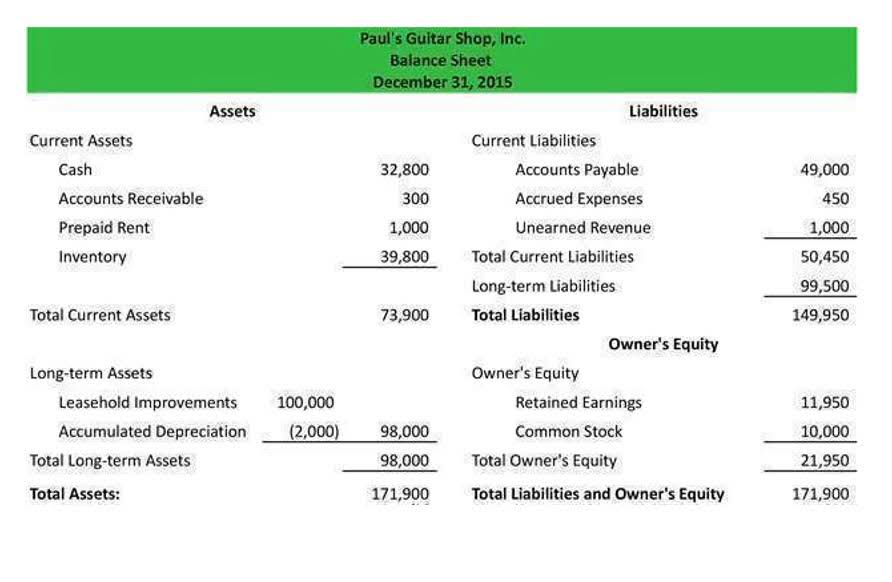
This guide provides a detailed analysis of the normal balance for revenue accounts, a key component of a business’s income statement. A contra account contains a normal balance that is https://www.bookstime.com/ the reverse of the normal balance for that class of account. The contra accounts noted in the preceding table are usually set up as reserve accounts against declines in the usual balance in the accounts with which they are paired. From the above equations, it can be seen that assets, expenses, and losses carry a debit balance while capital, liabilities, gains, and revenues normally have a credit balance. Typically, the balance sheet accounts carry assets with debit balances, and liabilities as credit balances. These are static figures and reflect the company’s financial position at a specific point in time.
- Cash equivalents are short-term investments that you can convert quickly into cash with normal balances.
- Every financial transaction affects an account related to assets, liabilities, or equity.
- Each payment made is an expenditure captured, leaving digital footprints across your ledger, shaping your fiscal story one expense at a time.
- The classification of these assets on the balance sheet can either be current assets or long term/non-current assets.
- When a business earns revenue, it is recorded as a credit entry.
- To diagnose and correct inaccurate debit balances, start with a thorough health check of your accounts.
- The receivables can be created by either trade or non-trade activities.
Cash account
The accounting cycle is vital to understand since it is the structure upon which accounting is designed. Ed would credit his Online store fee account as this is an expense account. It would increase the expense account’s normal balance by $50. This entry keeps the accounting equation in balance, as an asset (Cash) has increased and equity (via Service Revenue) has also increased. The first part of knowing what to debit and what to credit in accounting is knowing the Normal Balance of each type of account.

- So for example a debit entry to an asset account will increase the asset balance, and a credit entry to a liability account will increase the liability.
- He has $30,000 sitting in inventory and buys another 5 computers worth $10,000.
- Cash is debited as the business receives cash from interest.
- This way, the transactions are organized by the date on which they occurred, providing a clear timeline of the company’s financial activities.
- An EPM Cloud Service instance allows you to deploy and use one of the supported business processes.
Asset accounts normally have debit balances, while liabilities and capital normally have credit balances. Income has a normal credit balance since it increases capital. On the other hand, expenses and withdrawals decrease capital, hence they normally have debit balances. The term “normal balance” in accounting refers to the side of an account (debit or credit) where increases to that account normal balance of accounts are typically recorded. It’s the expected side to see a balance on, making it easier to identify errors.
