Who is Marc Jacobs, and where it all starts
The birth was in New York City in 1963 — Wikipedia records the date as 9 April 1963 — and the city has been the anchor for everything since. He was trained at Parsons the tote bag sale and graduated in 1984. Before a company existed to attach it to, he collected the CFDA Perry Ellis Award for New Fashion Talent, and remains its youngest recipient. There are therefore two answers to the question who is Marc Jacobs, and they sit apart: a designer with a major award before he had a business, and a business that took another decade to look like one. This account keeps them separate, because a marc jacobs history that runs together the man and the corporate entity will get the dates wrong. Take spelling first: search data is full of the singular “marc jacob,” but the label has always carried the plural, Jacobs.
1984 to 1986: the partnership, then the name on the label
Any timeline meets a problem at once, and the problem is 1984. Founded that year, says the brand’s own history page, and the fortieth anniversary was duly observed in 2024 on that basis. The press record is more finely grained: 1984 is the year Jacobs went into business with Robert Duffy as Jacobs Duffy Designs, 1986 is the year the first collection came out under his own name, and 1993 is the year the licensing company was established. They do not contradict one another; they describe different moments, not rival claims about one. For anyone following the marc jacobs designer career rather than the corporate entity, 1986 is the straight starting line, since that is when the name went on the clothes. Duffy’s part in it is easy to underplay and should not be, because the partnership rather than the solo talent is what survived the decade that followed.
1988 to 1993: Perry Ellis and the grunge collection
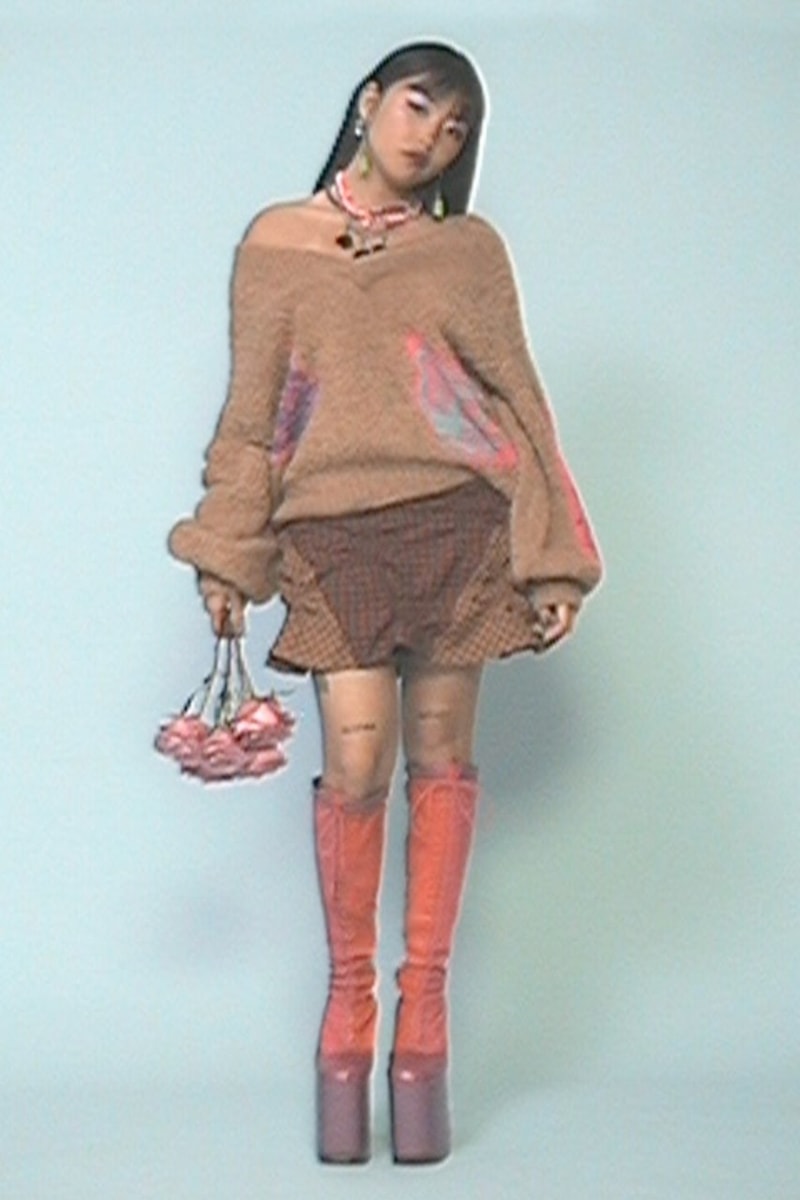
Jacobs arrived at Perry Ellis in 1988, taking on an established American sportswear house instead of building another one. What his early career is still measured against was shown in November 1992: a grunge collection for Spring 1993, thrift-store shapes and flannel sold at designer prices. The response was loud and badly split, and by early 1993 he had been dismissed. On the brand’s own timeline the episode is filed under 1993 and called the Original Grunge Collection, which is why both years cling to the same clothes — the show was November 1992, the season it was made for was Spring 1993. In 2018 the house returned to it deliberately, with what it labels the Grunge Collection Redux — a company putting back on the thing that got its designer fired. Seen from here, losing that job is the moment the independent label stopped being optional.
1997 to 2013: the Louis Vuitton years
Something happened twice in 1997, and the two are usually told as one story. Jacobs took the job of first creative director at Louis Vuitton, and LVMH took a majority stake in his own label — the exact percentage has never been disclosed. His first ready-to-wear for the house turned Vuitton from a leather-goods maker into a full fashion house. He also oversaw the artist collaborations that changed what a luxury handbag could look like: Takashi Murakami, Stephen Sprouse, Richard Prince and Yayoi Kusama. His final show for the house was in October 2013 and Nicolas Ghesquière succeeded him; sources giving the span as 1997 to 2014 are counting forward to the successor’s debut. Appetite for that work has not gone away, and The RealReal’s 2026 resale report noted saved searches for marc jacobs louis vuitton up 375% year on year. His first own-name store opened in SoHo in that same year.
2001 to 2020: diffusion lines, up and down
Marc by Marc Jacobs came in 2001 and did exactly what a diffusion line should, placing the name within reach of people who were never going to buy the runway. The line was discontinued in 2015, after that year’s fall and winter collection, and folded back into the main line. Criticism of the decision is worth quoting because it came from named analysts rather than anonymous chatter. In 2018 the trade title Glossy quoted Luca Solca saying the brand had missed its chance to be a relevant accessible label, and that killing Marc by Marc Jacobs was a mistake; the consultant Rony Zeidan said that the loss of tiering had cut the brand off at the legs. The answer had two parts: The Marc Jacobs, announced in December 2018 and launched for Pre-Fall 2019 as a more affordable contemporary line, then Heaven by Marc Jacobs, launched in September 2020 under Ava Nirui. Heaven is the more peculiar of the pair, described by Jacobs as a world within the Marc Jacobs world; its future is genuinely open now that Nirui’s exit was announced in January 2026 with no successor named.
2019 to 2025: a fortieth anniversary, and The Tote Bag
What rescued the accessible end of the business was not a diffusion label but a product. The Tote Bag went on sale in 2019, drawn from archival designs, and rose to be the house’s best seller largely through TikTok. Letting store employees post from their own accounts, the company found the platform returned product insight in three to six days rather than three to six weeks. In the brand’s own copy Jacobs framed the bag’s purpose: “No more Birkins, only Tote Bags,” rejecting exclusivity and elitism in six words. What marked the fortieth anniversary in 2024 was collaborations rather than a retrospective: Anna Sui in March, then Stephen Sprouse’s graffiti tote in June, NIGO in August, Futura in September and Denim Tears in October. In September of the year 2025 the JOY artist capsule landed with Derrick Adams, David Shrigley and Hattie Stewart, ahead of a twenty-six-piece October collection with A.P.C. The show cadence stayed deliberately awkward through all of it: roughly once a year and off the official New York Fashion Week calendar.
2026: ownership changes hands
On 14 May 2026, LVMH and WHP Global announced a definitive agreement covering the sale of Marc Jacobs. On 1 September 2026 the transaction closed, with G-III Apparel Group alongside WHP. The structure deserves attention: a fifty-fifty joint venture holds the intellectual property, WHP leads licensing, and G-III owns and operates wholesale, retail and e-commerce under a license running to 2041. A total of roughly $925 million appears in press reports, but LVMH disclosed no value, and the figure should be read as reported rather than confirmed. The role of Founder and Creative Director stays with Jacobs. He said in statements issued with the deal that he was “forever grateful to Bernard Arnault for his support, belief and trust in me over the last 30 years,” and Arnault called him a designer of “rare creativity and unique vision,” a warm close to nearly thirty years. The consequence in practice is blunt: as of September 2026, labeling Marc Jacobs an LVMH-owned brand is out of date.
The timeline, dated
Because dates in fashion writing drift, and this brand’s drift more than most, the table below pins them down. The published company version is kept apart from what the press record shows, because the two do not always agree. Where a show and its season differ, the grunge collection above all, the table gives the date of the show. The entry says so wherever a figure is reported rather than officially confirmed. This is the skeleton; the sections above are the flesh. Most of the weight in 2026 sits in two rows: the agreement in May, and the close in September.
| Date | What happened |
|---|---|
| 1963 | Born in New York City, with Wikipedia giving 9 April 1963 |
| 1984 | Leaves Parsons with a degree; brand timeline dates the founding here; press records Jacobs Duffy Designs with Robert Duffy |
| 1986 | A first collection under his own name |
| 1988 | Signs with Perry Ellis |
| November 1992 | Shows the grunge collection made for Spring 1993 |
| Early 1993 | Let go by Perry Ellis; licensing company established; brand calls it the 1993 Original Grunge Collection |
| 1997 | Appointed Louis Vuitton’s first creative director; LVMH takes an undisclosed majority stake; first store opens in SoHo |
| 2001 | Marc by Marc Jacobs is launched |
| October 2013 | His last show for Louis Vuitton; Nicolas Ghesquière succeeds him |
| 2015 | Marc by Marc Jacobs discontinued and folded into the main line |
| 2018 | Grunge Collection Redux is staged |
| 2019 | The Marc Jacobs launches for Pre-Fall; The Tote Bag arrives |
| September 2020 | Heaven by Marc Jacobs launches under Ava Nirui |
| 2024 | Fortieth anniversary, marked with a year of collaborations |
| 14 May 2026 | A definitive agreement is announced for the sale to WHP Global |
| 1 September 2026 | The sale to WHP Global and G-III Apparel Group closes; press reports about $925 million |
